
Garage door springs do the heavy lifting that makes your door feel manageable. When springs are working correctly, the door rises smoothly, stays steady, and closes in a controlled way. When spring support changes, the door can start to feel heavy, move unevenly, or become unpredictable. That is when garage door spring repair becomes less about convenience and more about safe operation.
Spring issues can also be confusing because symptoms can overlap with other problems. A door that shakes, reverses, or stops mid-travel can involve springs, but it can also involve cables, rollers, tracks, or opener strain caused by imbalance. This article explains the most common warning signs of spring problems, why those signs matter, and what to expect when a professional inspects the door.
The Most Urgent Signs You Need Spring Repair Right Away
Some garage door spring problems show up as a sudden failure. Others build slowly over time. Either way, certain symptoms are strong signs you should stop using the door and call a professional.
Here are the most urgent signs:
A loud bang followed by a door that will not open normally
Homeowners often describe this as a sound like a firecracker or a heavy board dropping. After that, the door may only lift a few inches or may not lift at all. This is a common moment that triggers calls for garage door spring repair.
The door feels much heavier than normal
If the door suddenly feels heavy, the spring support may have changed. When springs weaken or fail, the door weight is no longer balanced for smooth lifting. That can make the door difficult to operate and can strain the opener.
The door drops quickly or closes with more force than before
A controlled close depends on balanced lifting support and stable travel. If the door feels like it is dropping fast, slamming, or losing steady control, it is safer to stop using it until a technician checks the system.
The opener struggles, hums, or stops mid-cycle
When springs are not supporting the door correctly, the opener may struggle to move the door. This can show up as slow travel, mid-cycle stopping, or repeated reversing.
The door lifts unevenly or looks crooked during travel
Spring support affects door balance. If the door rises unevenly, it can pull other parts out of alignment and increase wear quickly.
If you notice these symptoms, the safest move is to stop running the door and schedule an inspection. A door that is operating without proper spring support can become unpredictable and can lead to more damage across the system.
Spring problems can also show up alongside other garage door issues, especially when the opener starts reacting to added resistance or the door becomes unpredictable.
If you want the full checklist of situations where scheduling service is the safest move, read When Should You Call a Professional for Garage Door Repair?.
How Garage Door Springs Work
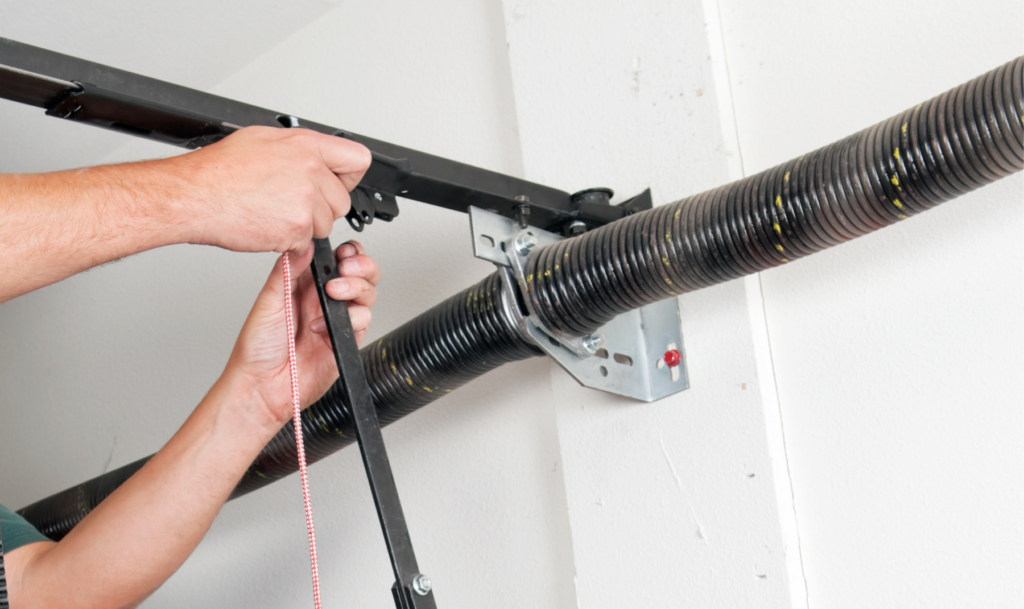
A garage door is heavy, but it is designed to feel lighter during operation. Springs provide the lifting force that offsets the door’s weight. That balance is what helps the door move smoothly and helps the opener lift the door without excessive strain.
When springs are in the right condition, the door:
- Starts moving without a hard jerk
- Travels smoothly through the tracks
- Stays steady instead of wobbling
- Closes without dropping
- Feels consistent day after day
Over time, springs can wear down from daily cycles. Wear can reduce the lifting support, which changes how the door behaves. A small change in spring strength can shift door balance and create extra resistance.
That resistance not only impacts the door, but it can also affect the entire system. Rollers may drag more, and tracks may take more force. Cables may carry an uneven load. The opener may work harder than it should. That is why spring symptoms matter even when the door is still “kind of working.”
Common Symptoms That Point to Spring Problems
Not every spring problem looks dramatic. Many garage door spring repair calls begin with small changes in movement, sound, or consistency. Here are the most common symptoms and what they usually mean.
The Door Feels Heavy or Harder to Lift
A door that feels heavier than usual is one of the strongest clues that lifting support has changed. Springs are designed to offset most of the door’s weight. When that support weakens, the door can feel like it is “fighting” the opener or resisting at the start of travel.
The Door Only Opens a Few Inches
If the opener turns on but the door barely lifts, the spring support may be too low to help the door move through the first part of travel. This symptom is common after sudden spring failure, but it can also happen as springs weaken over time.
The Door Stops Mid-Travel or Reverses
Stopping or reversing can happen when the system detects resistance. Springs can be one cause, especially when the door becomes too heavy for smooth travel. But a professional needs to confirm whether the resistance is from spring imbalance or from other parts like rollers or tracks.
Uneven Movement or a Crooked Door
A door that rises unevenly, or looks tilted in the opening, often signals an imbalance condition. Springs influence how evenly the door moves and how stable it stays across both sides during travel.
New Noises During Lifting or Lowering
Springs can create noise as they wear or as balance changes create strain on other parts. Homeowners often report sharp pops during motion, loud snapping sounds, sudden banging, or new vibration during travel.
Jerky Travel or Shaking That Wasn’t There Before
When spring support changes, door motion can become less stable. The door may start smoothly and then jerk, shake, or wobble. This can also connect to roller wear or track alignment, which is why a system inspection matters.
The Opener Seems “Fine,” but the Door Is Not
Sometimes the opener still powers on and lights up, so the issue seems electrical. But if the door is heavy or unbalanced, the opener may struggle even though it is “on.” In many cases, the opener is reacting to the door problem, not causing it.
Why Spring Problems Often Lead to Other Repairs
Spring problems do not always stay in the spring area. When the door balance is off, other parts can take on extra force and wear out faster.
Here is how the chain reaction often happens:
- Springs weaken, and the door balance changes
- The opener has to pull harder to lift the door
- Extra force increases wear on rollers and hinges
- Uneven movement affects tracks and can shift alignment
- Cables can carry uneven loads and may start to fray or slip
This is why spring concerns are often connected to cable concerns. If the door is lifting unevenly, we inspect the lifting parts together, not in isolation.
If you notice uneven lifting, a tilted door, or slack near the sides, worn cables may be contributing to the imbalance, so read How Do You Know If You Need Garage Door Cable Repair?
Spring Repair vs. Other Problems That Can Feel Similar
A door that is loud, shaky, or unreliable can be caused by springs, but other issues can create similar symptoms. That is why guessing can lead to the wrong solution and delay the right garage door repair.
Some examples of overlap:
- Shaking and vibration can come from an imbalance, but also from worn rollers
- Scraping sounds can be linked to rough travel, but also to track alignment changes
- Stopping in one spot can be due to resistance, but also to track issues
- Crooked travel can be related to balance, but also to cable wear
A professional inspection clarifies what is truly driving the symptom, so the repair restores stable operation.
When symptoms overlap, reputable home publications often recommend calling professionals, as garage doors combine heavy weight and multiple moving parts, making a correct diagnosis the safest option.
If your garage door shakes, scrapes, wobbles, or rubs while moving, failing rollers or tracks may be causing the resistance that makes it feel unstable, read What Causes Garage Door Rollers or Tracks to Fail?
What Happens During a Professional Spring Repair Visit
A professional spring repair visit should focus on safety, system balance, and reliable performance. While each door is different, a quality appointment usually includes:
- Full system inspection: door balance, travel behavior, lifting support, cables, rollers, tracks, and hardware
- Safety-focused evaluation: checking for uneven movement, resistance points, and strain signs
- Clear explanation: what is causing the symptoms, and what repair steps restore stable operation
- Correct parts matching: selecting specifications that match the door size and use
- Testing and verification: smooth travel, controlled closing, stable alignment, and consistent opener response
- Final walkthrough: what was repaired, what was inspected, and how the system should feel afterward
The goal is not only to address a worn part. The goal is to restore safe, even operation across the entire door system.
Consumer inspection checklists emphasize a full system inspection, including balance, cables, and safety features, because spring-related symptoms often involve more than one mechanical cause.
Bringing Back Smooth and Safe Door Movement
Garage door spring problems often start with small warning signs, but they can quickly affect safe operation. A door that feels heavy, lifts unevenly, stops mid-travel, or becomes louder is usually signaling that the lifting support and balance are no longer stable. The safest choice is to stop using the door when movement becomes unpredictable and schedule a professional inspection to restore smooth, controlled performance.
Prime Garage Doors and Openers is here to help with spring concerns and the related parts that often wear when balance changes, so we can restore reliable access and safe operation for your home. If your door is showing spring symptoms or you want a professional inspection for peace of mind, contact us or give us a call.
Frequently asked questions
Can I keep using my garage door if I think the springs are worn?
If the door feels heavy, moves unevenly, or seems unpredictable, it is safer to stop using it and have us inspect it. Continuing to operate an unbalanced door can increase wear on rollers, tracks, cables, and the opener.
What are the most common signs of a spring problem?
The most common signs include a door that feels heavy, a door that only opens a few inches, sudden loud noises, uneven lifting, and a door that drops faster than normal. We can confirm the cause with a full system inspection.
Why did my garage door make a loud bang?
A loud bang can happen when the support changes suddenly. That sound is often reported right before a door stops lifting normally. We recommend stopping the operation and scheduling an inspection so we can identify the exact issue.
If my opener still has power, does that mean the springs are fine?
Not necessarily. The opener can still power on even when the door is too heavy to lift smoothly. We check the door balance and travel resistance to confirm whether the opener is reacting to a door issue or if the opener itself needs service.
Can spring problems cause my door to reverse while closing?
Yes, spring-related imbalance can create resistance that affects travel behavior. But reversing can also relate to alignment or other resistance causes. We inspect the full system to find the source and restore consistent closing.
Why does my door look crooked when it opens?
A crooked door is usually a sign of uneven lifting. Springs, cables, and alignment conditions can all contribute. We inspect the door as a system and explain what is causing the uneven travel.
Do spring problems always mean other parts are damaged too?
Not always, but an imbalance can increase wear on other parts over time. During our inspection, we check rollers, tracks, cables, and hardware to catch related wear early and prevent repeat issues.
How can I tell if it’s a spring issue or a roller or track issue?
Spring issues often show up as heaviness, sudden lifting change, or unstable balance. Roller or track issues often show up as scraping, grinding, wobbling, or repeated resistance in the same spot. We can confirm the cause with a professional inspection.
Is garage door spring repair urgent if the door still opens?
It can be. If the door is louder, heavier, shakier, or inconsistent, those are signs that the system is drifting out of stable balance. We recommend scheduling service before the issue spreads and causes more wear.
What should I expect after a spring repair is completed?
You should expect smoother travel, more stable movement, and consistent lifting and closing behavior. We test the operation and verify that the door is balanced and moving safely before we wrap up.